
Employee perks can be an effective way for an employer to differentiate itself.
Perks are recognition of a job well done. They show that workers are valued in a way that pay or bonuses can't. And they help you to retain that most important of business assets: top talent.
Or at least they should. In reality, there are plenty of employee perk programs that fail to have a meaningful impact on retention, and instead represent nothing more than a drain on your HR department's resources.
The most common issue: perks are offered on an ad-hoc basis, minus a plan or the ability to measure ROI.
Simply offering corporate perks and benefits is not enough. You need to offer them strategically: the right benefits, delivered in the right way, in return for the right level and quality of work.
In this guide we'll break down how NZ businesses can build a strategic, sustainable perks program that truly impacts retention.
Why corporate perks fail to retain staff
Offering employee perks is not an automatic home run. In a job market as competitive and tight as New Zealand's, there are a number of reasons why a program might fail to help you retain talent.
Common pitfalls include:
A failure to consult your team: Just one in three NZ employees are satisfied with their current benefits package. If you don't chat to your employees before you set up your program, and instead choose your perks based on what's trending, or what you think your workers want, you risk establishing a program that simply doesn't resonate with your staff.
No connection to company culture or goals: Just as your program needs to be relevant to your workers, it also needs to be relevant to your business, aligning with your culture and encouraging staff to not just hang around, but help push the company forward.
Lack of communication or visibility: If you fail to properly introduce and explain your program, a majority of your team may not know about it or care about it, resulting in low uptake and minimal impact.
Ignoring compliance and FBT implications: Perks that look generous on paper can quickly lose their shine if they create unexpected Fringe Benefit Tax obligations or breach employment or tax rules. Non-compliance could lead to unplanned costs, admin headaches or the need to withdraw benefits later, all of which can undermine retention instead of supporting it.
Now that we know what to avoid, let's look at how a business might be able to craft a truly difference-making employee benefits program: the type that delivers recognition, increases job satisfaction, and encourages your workforce to hang around.
Step 1: Assess your current employee perks situation
The first step to crafting an effective company benefits and perks package is to understand the base from which you need to work:
Audit existing perks: What, if anything, do your current employee benefits look like? Do they meaningfully impact the employee experience? Analyse what’s being offered, who’s capitalising on the perks, and whether there are opportunities to do better.
Survey staff: What do employees want included? Work to understand what your team actually values - wellness, flexibility, recognition, learning - and use these insights as the basis for your new and improved program.
Analyse retention metrics: Try to understand the overall impact that perks are having on retention, through things like churn data and employee surveys. Exit interviews can be particularly valuable, as you can directly ask those who leave whether your program had any impact.
Consider company goals: Ultimately you need to offer perks that support retention, engagement and employer branding. They need to be tempting to employees, but more importantly they need to be effective for your business, helping your company to achieve its goals.
Step 2: Design an employee benefits strategy that fits your culture
Having gained an understanding of where you are and where you want to go, it's time to craft your perks strategy.
Begin with purpose, not perks. Consider the 'why' behind your program - retention, ensuring employees feel valued, enhancing their quality of life both in the office and outside of work - then craft a program that ticks each of those boxes.
What benefits should you offer? Consider the relevance and effectiveness of perks like:
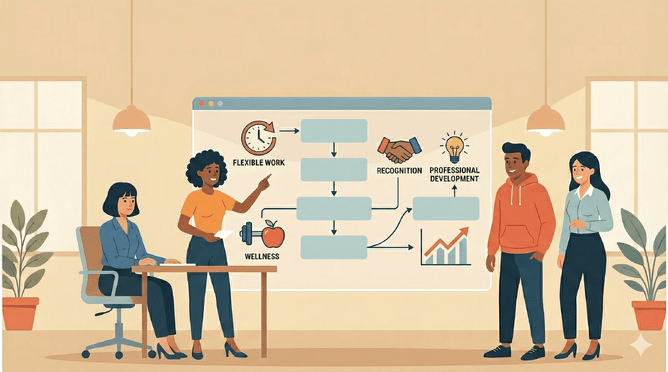
Wellbeing & lifestyle: Gym memberships, mental health support and general wellness perks are becoming more and more popular in NZ as employees and employers understand and recognise the importance of holistic health.
Work flexibility: In a post-COVID world, the value of allowing employees to enjoy hybrid schedules, flexible leave options and the ability to work from home has never been higher. Paid time off (PTO), particularly in extenuating circumstances like compassionate leave, can also demonstrate that you're an employer who truly cares about its workers.
Recognition & development: Consider offering learning stipends, mentorship programs, and professional development packages that grant employees the ability to grow in their role and career.
Financial perks: Access to exclusive discounts, vouchers or carefully crafted bonuses are the most direct and universally desired type of reward that you can offer your employees.
Once again, your employees are your best source of perk ideas. If they want discounts, career development opportunities or free lunches, that's exactly what you should offer them.
Make the requirements to earn a reward challenging, but not overly so. The program should be set up in a way that inspires workers to perform at an above average level. Make it too easy, and you'll expend lots of resources on rewards that lack meaning. Make it too hard, and workers won't bother trying to earn perks.
Step 3: Launch and communicate effectively
Having developed a range of company perks for employees, you now need to alert workers to the new program. Here's how to do so effectively:
Brand it: Give the program a memorable and snappy name, and create visuals to promote and explain it.
Educate leaders: Equip managers and members of the C-suite with the info they need to promote perks and encourage utilisation.
Launch it: Host an internal launch event that clearly outlines the details of the program to your entire team.
Select evangelists: Encourage high performing members of your team to take part in the program, to inspire other workers to do the same.
Gamify: Encourage friendly competition within your ranks by publicly tracking employee progress to goals and benefits.
Promote it: Share real staff experiences of earning and enjoying employee perks and benefits.
After the launch, your perks program needs to be communicated consistently, to ensure your workers don't forget about it and stay excited by it. Consider including an employee benefits feature in your monthly newsletter, or sending out a company-wide email every Friday to showcase workers who hit milestones over the course of the week.
Step 4: Measure and optimise your company perks
Employee perks packages are never 'set-and-forget'. They are living, breathing things that should continually evolve, enhancing based on feedback, and adapting to the changing needs and wants of your workers.
Here's how to do it:
Track usage and outcomes: Understand who’s using what, and the effects that the program is having on employee engagement and turnover.
Collect feedback: Send out quarterly surveys, conduct focus groups, and ensure managers have exit interviews with any workers who leave.
Calculate ROI: Compare the cost of the program against the improvements in retention and productivity that it has driven.
Refine over time: Retire unused perks, expand or enhance popular benefits, and trial new ones from time to time based on suggestions from your staff.
Tools like employee surveys, exit interviews and NPS scores can help you measure and optimise your perks program, while broad metrics like your employee retention and churn rates can give you a birds eye view of the effectiveness of your efforts.
NZ-specific employee perk considerations
New Zealand is home to a unique job landscape, so the employee perks that typically work in other countries may not necessarily work here.
New Zealand employers need to think carefully about compliance when designing employee perks, particularly around Fringe Benefit Tax. Benefits such as vehicles, insurance, vouchers and subsidised services can trigger FBT if they’re not structured correctly. While there are exemptions and de minimis thresholds, these rules are specific and easy to overlook.
When perks create unexpected tax costs or require complex reporting, they can end up undermining retention rather than strengthening it.
Cultural relevance matters just as much as tax treatment. In New Zealand we appreciate work-life balance: flexibility, time off and general wellbeing are often valued more than flashy extras. Perks that support mental health, realistic workloads, family time and autonomy tend to resonate more than those borrowed from overseas tech or corporate cultures.
This is especially important for small and mid-sized businesses, which make up a large part of the NZ economy. The good news is that you don’t need a big budget to compete on employee perks: flexible hours, extra leave options, wellbeing days, learning support and clear career pathways can all deliver strong perceived value at relatively low cost.
Real-world examples of perks for employees that boost retention
Perpetual Guardian
Flexible leave schemes have proven especially effective in NZ. Perpetual Guardian is known for embedding flexibility into its employee experience, including trialling and then adopting a four-day work week. While not framed as a “perk” in the traditional sense, the approach led to higher engagement, reduced burnout and enhanced loyalty within its team, helping position the company as an employer of choice in a competitive market.
Xero
Learning and development allowances are another retention lever, particularly in New Zealand where career progression influences tenure relatively strongly. Xero, which operates across NZ and Australia, offers dedicated learning budgets and internal development pathways. This investment in employability has supported high engagement scores and reinforced its reputation as a place to build a long-term career, not just hold a role.
Southern Cross Health Society
Health and wellbeing stipends are increasingly common among mid-sized employers. Southern Cross Health Society has long promoted preventative wellbeing through subsidised health cover and wellness initiatives. Organisations using similar models report lower absenteeism, stronger engagement and improved retention, especially when benefits are clearly communicated and easy to use.
Spark
Community volunteering perks also resonate with workers. Companies such as Spark New Zealand offer paid volunteer days, allowing employees to contribute to causes they care about. This strengthens connection, purpose and pride in the employer brand, which in turn supports retention.
Across these examples, the common thread is relevance. Perks aligned to real employee needs tend to deliver lower churn and more engagement.
Recognise, reward, retain
Recognise, reward, retain
Strategic perks aren’t about spending the most. They’re about listening, aligning and measuring. By building a structured, meaningful perks framework around retention goals, you can keep more of your best workers and set your business up for success.
Recognition and reward inspires passion, energy and commitment. At 1Team we help your business treat high performing team members to a range of perks, such as savings from New Zealand's leading retailers (Torpedo7, Dulux, Pita Pit, Hirepool, Repco, Warehouse Stationery), all delivered through an app with your branding.
Ready to recognise, reward and retain your best workers? Get started today.